
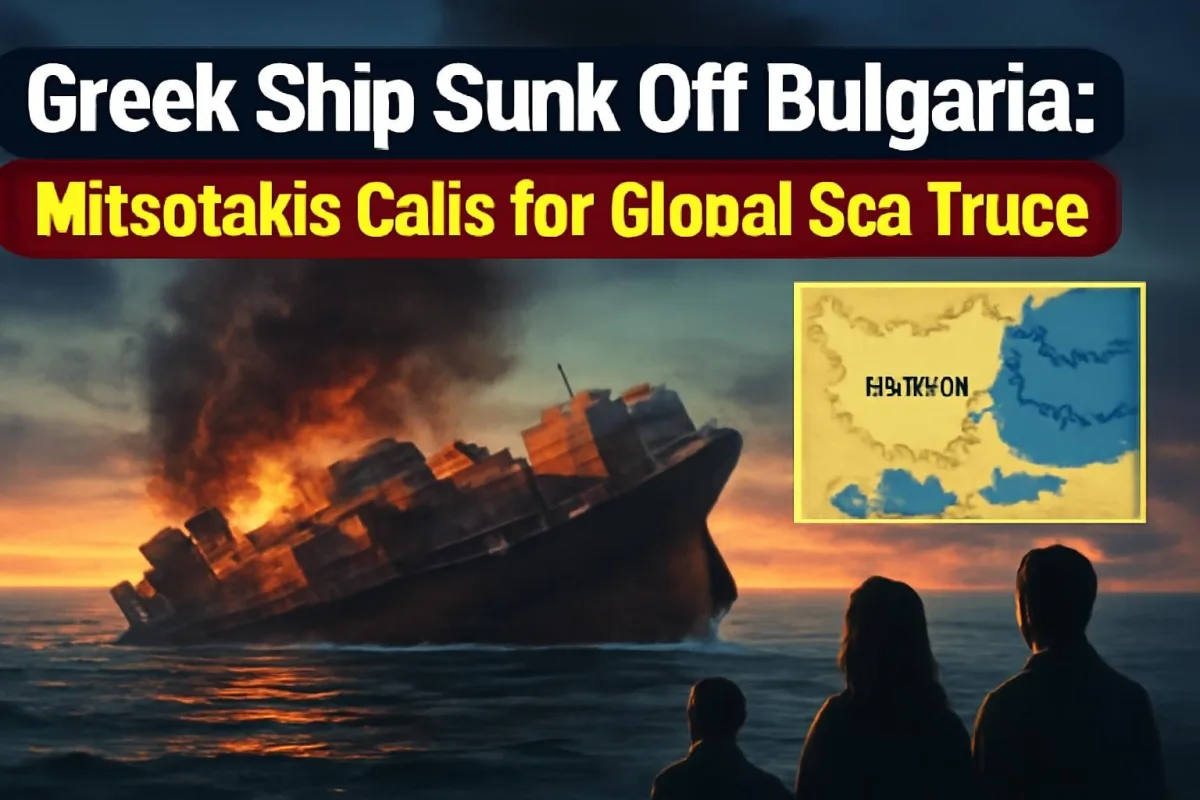
A Greek container ship has been sunk by a drone attack in the western Black Sea, inside Bulgaria's exclusive economic zone, in one of the most serious strikes on civilian shipping in the region this year. All 18 crew members of the vessel, the Contship Jet, were rescued and brought to the Bulgarian port of Varna. Hours later, Greek Prime Minister Kyriakos Mitsotakis stood before the UN Security Council and called for a "global maritime truce".
What Happened to the Contship Jet
The ship was sailing from Haifa in Israel to Constanta in Romania with 421 containers on board. According to maritime reports, the cargo included lithium-ion batteries, corrosive chemicals, acids and industrial parts. A high-speed unmanned surface vessel – essentially a sea drone packed with explosives – rammed the ship and exploded, and the vessel later went down.
The 18-member crew, made up of 14 Filipino and four Ukrainian sailors, were all rescued safely. The attack was the latest in a string of strikes on merchant ships in the western Black Sea this month.
Who Is Responsible?
That remains unclear. Maritime risk firm Ambrey said the drone appeared to be a remotely controlled variant of a Russian design. Bulgaria's prime minister suggested Russia was the main beneficiary of such attacks, but Moscow has denied any involvement. No group has claimed responsibility, and investigations are ongoing.
Mitsotakis at the UN: 'Our Seas Cannot Become a Jungle'
Greece currently holds the presidency of the UN Security Council, and Mitsotakis used a debate on maritime security to press his case. He said commercial ships must be able to move safely and freely even during conflicts, and called targeted attacks on civilian shipping "completely unacceptable". The sinking, he said, was "yet another reminder" of why a truce at sea was needed.
He also warned that disruptions to shipping push up freight and insurance costs, which eventually land on ordinary consumers. "We cannot allow our seas to become a jungle," he told the council.
Mitsotakis also took aim at the maritime accord between Turkey and Libya, which Greece, Cyprus and several Arab states have condemned. He said no bilateral arrangement can override the international law of the sea.
| Key Fact | Detail |
|---|---|
| Vessel | Contship Jet (Greek container ship) |
| Route | Haifa, Israel to Constanta, Romania |
| Cargo | 421 containers incl. lithium-ion batteries and chemicals |
| Location | Western Black Sea, Bulgaria's EEZ |
| Weapon | Explosive unmanned surface vessel (sea drone) |
| Crew | 18 (14 Filipino, 4 Ukrainian) – all rescued to Varna |
| Attacker | Unconfirmed; Russia denies involvement |
| Diplomatic response | Greek PM calls for global maritime truce at UNSC |
Why It Matters for India
India has a big stake in safe sea lanes. Indian seafarers make up one of the largest groups of crew on merchant ships worldwide, and the dangers they face have been made painfully clear this year – the Ministry of External Affairs recently said 14 Indian seafarers were among 22 Indians killed in the West Asia conflict. Every new attack on shipping also raises insurance and freight costs, which feed into the prices of imported goods, fuel and fertiliser in India.
The Black Sea is also a key route for grain, sunflower oil and fertiliser that reach Indian markets. Wider insecurity there can mean costlier edible oil and tighter supplies.
A Pattern of Attacks at Sea
The sinking adds to a worrying trend. Sea drones, once seen mainly in naval warfare between Russia and Ukraine, are now turning up in attacks on ordinary merchant vessels far from the front line. Unlike missiles, they are cheap, hard to detect on radar and can be launched from small boats or even the shore. For shipowners, that means no stretch of the Black Sea can be considered fully safe, and crews on even routine cargo runs are now at risk.
What Happens Next
Bulgarian authorities are expected to assess the environmental risk from the sunken cargo, given the batteries and chemicals on board. Shipping insurers are likely to raise war-risk premiums for the western Black Sea again, and Greece is expected to push its truce idea further at the UN during its council presidency. Whether major powers take it up – and whether the attacks stop – will decide how safe the waters are for the thousands of sailors who cross them every week.




Comments (0)